
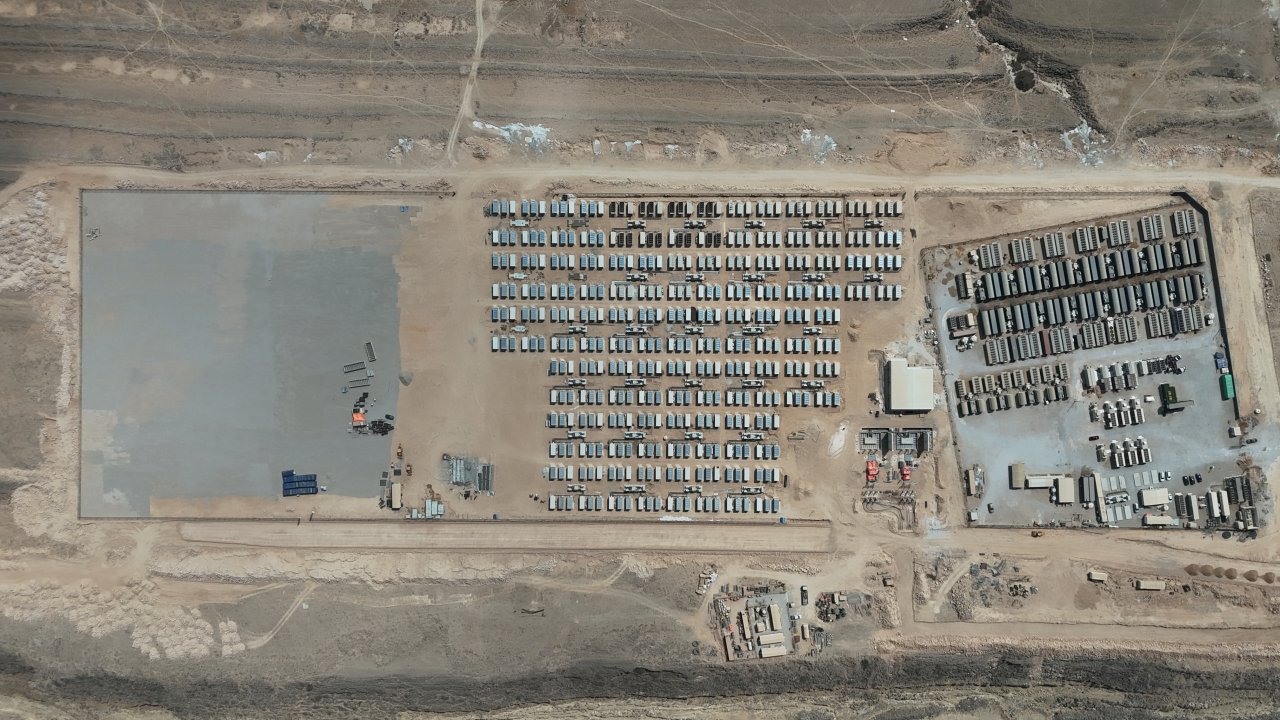
Our Experience in Oman and Ecuador
Building mining farms in extreme environments is one of the most complex challenges in the Bitcoin mining industry. The difficulties go beyond implementing advanced cooling technologies and protecting equipment: they also involve integrating with local energy systems, managing logistics, and ensuring reliable connectivity.
At Alps Blockchain, we embraced this challenge by developing infrastructures in two completely different environments: the desert of Oman and the rainforest of Ecuador. These experiences allowed us to refine our expertise and develop innovative solutions that can be applied to other challenging environments. Here is the story of our journey, the challenges we faced, and the lessons we learned.
Why did we choose these locations?
Oman: the desert as a technological testing ground
Salalah, located in southern Oman, offers desert climate conditions with high temperatures and a dusty environment. For us, it represented the ideal location to test advanced cooling technologies and strategies for managing dust and sand. In addition, Oman is investing heavily in digital infrastructure and initiatives to diversify its economy, making it a favorable environment for blockchain projects.
Ecuador: renewable energy powering mining
The Amazon region of Ecuador presents the opposite characteristics: a humid climate, frequent rainfall, and extraordinary biodiversity. However, the region's greatest advantage is its abundant, low-cost, low-impact hydroelectric power. The opportunity to integrate our facilities with an existing hydroelectric plant provided a unique way to reduce energy costs and improve the sustainability of mining operations.
Lessons learned during the construction process
- There is no one-size-fits-all solution. Every environment requires a tailored approach. The strategies developed for the desert cannot simply be adapted to the rainforest, and vice versa.
- Continuous innovation. The technologies we use must be constantly updated and improved. For example, the cooling systems implemented in Oman have evolved over time to become even more energy efficient.
- Collaboration is better than competition. Working with local partners enabled us to integrate with existing infrastructure, reducing implementation times and improving operational reliability.
Challenges faced and solutions implemented
In the Ecuadorian rainforest:
- Humidity and heavy rainfall: We selected corrosion-resistant materials and specialized protective coatings to safeguard electronic components against humidity and long-term damage.
- Logistics and transportation: The difficulty of accessing remote areas required careful supply chain planning. We relied on both water and land transportation to ensure the delivery of equipment.
- Connectivity: Thanks to the implementation of the Starlink satellite network, we ensured stable internet connectivity even in the most isolated areas.
In the Omani desert: - Heat management: Although Salalah experiences milder temperatures than many other desert regions, cooling remains a major challenge. We adopted a closed-loop liquid cooling system, providing an optimal balance between efficiency and energy consumption.
- Protection from dust and sand: To protect the hardware, we deployed sealed containers equipped with dust filters and established a regular maintenance program to prevent the accumulation of harmful particles.
The key role of local partnerships
- In Oman: We partnered with Green Data City, a technology hub holding a mining license supported by the country's Ministry of Digital Economy. This partnership provided privileged access to stable infrastructure, facilitating the integration of our operations into a well-regulated and growth-oriented environment.
- In Ecuador: Through partnerships with local energy producers, we connected our mining farms directly to the hydroelectric system, reducing our environmental impact while securing a reliable and cost-effective energy supply.
The key ingredients for success
- Reliable energy and connectivity: Essential elements for the stable operation of a mining farm, made possible through strong local partnerships.
- Advanced and flexible infrastructure: The use of modular containers designed to withstand extreme conditions provided greater protection and adaptability.
- Cutting-edge technology: From high-efficiency hardware to advanced cooling systems, every solution was optimized for the specific environment.
Conclusion
Our experience in Oman and Ecuador has demonstrated that mining can be successfully adapted to virtually any environment, provided the right strategies are implemented. We continue to evolve our approach to make mining increasingly sustainable and efficient by combining global expertise with local knowledge.
The challenges we faced throughout these projects have strengthened our know-how and enabled us to develop solutions that can be replicated in other extreme environments. Through our commitment to innovation and sustainability, we are opening new opportunities for the future of cryptocurrency mining, demonstrating that the industry can successfully integrate with the natural and economic resources of the regions in which it operates.

