
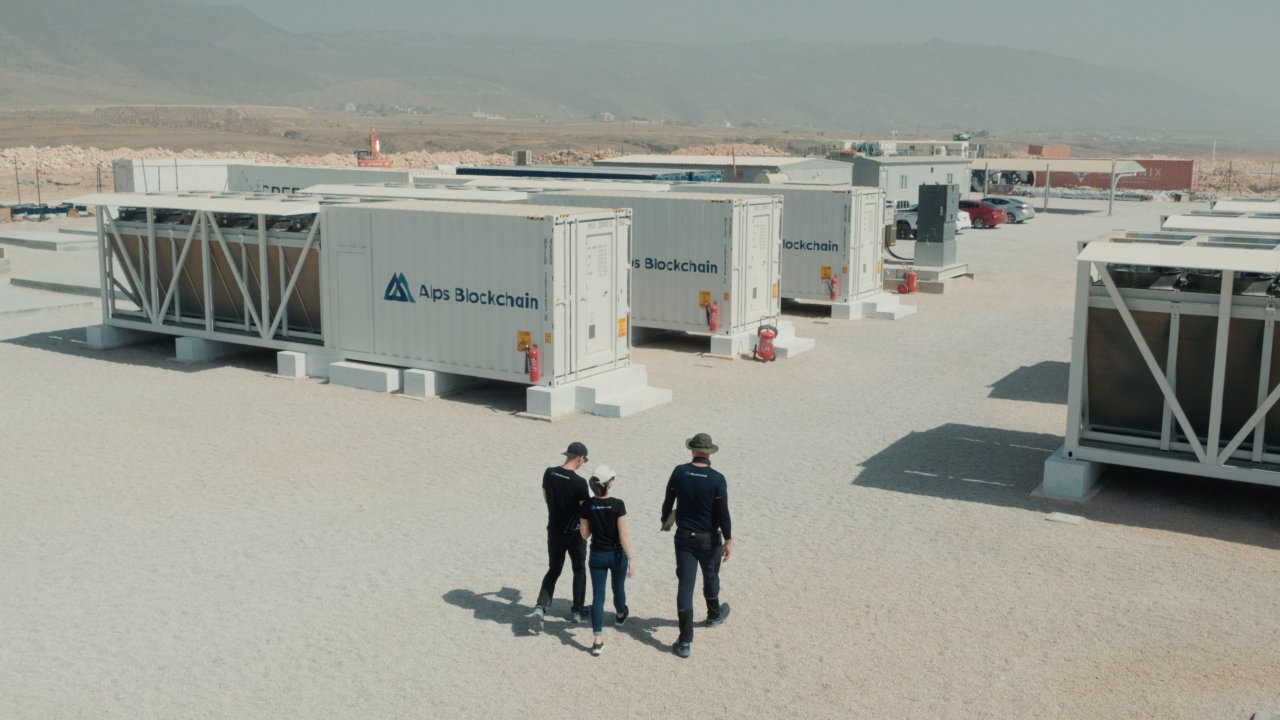
Nine Lessons We've Learned Building Hydro-Cooled Bitcoin Mining Farms
Hydro-cooled Bitcoin mining farms are gaining increasing attention as highly efficient, low-noise infrastructure for industrial-scale mining. But taking a liquid-cooled mining farm from concept to production is far from straightforward. It requires engineering expertise, operational discipline, and the ability to adapt every project to its specific environment.
Drawing on our firsthand field experience, here are nine lessons that separate a mining farm that performs reliably from one that fails before it even reaches full operation.
1. Water Isn't Consumed—It Circulates
Contrary to a common misconception, a hydro-cooled mining farm does not consume water. It operates through a closed-loop cooling system, where the coolant continuously circulates without evaporation or significant losses. When properly engineered, this approach delivers highly efficient and stable thermal performance, even in demanding environments, while significantly reducing energy consumption and acoustic emissions. Designing and managing the cooling circuit is an engineering discipline in its own right—it should never be improvised.
2. The Site Shapes the Entire Project
Topography, climate, altitude, and power availability are strategic variables that influence every aspect of a hydro-mining project. A facility built in the Omani desert, for example, requires completely different engineering solutions than one operating in an Arctic climate. A modular design alone is not enough. Successful deployments require deep engineering adaptation of the layout, hardware configuration, cooling systems, and operational logistics. Excessive standardization is often a liability rather than an advantage.
3. High Density Demands Absolute Precision
Hydro-cooled mining farms achieve exceptional computing density and space efficiency—but this leaves virtually no room for error. A poorly tightened fitting, an unbalanced coolant flow, or an incorrectly configured pump can compromise the entire cooling system. This is not a forgiving technology. Reliable operation depends on experienced personnel, rigorous procedures, and premium-quality components.
4. The Environment Never Forgives
Ambient temperatures above 40°C reduce cooling efficiency, while insufficient spacing between containers can negatively affect airflow, maintenance operations, and personnel safety. The cooling fluid itself also requires continuous quality monitoring. Contaminants and mineral deposits gradually reduce thermal performance and system reliability. A hydro-cooled mining farm requires structured preventive maintenance and cleaning protocols—not reactive maintenance performed only when problems arise.
5. Technical Expertise Must Be Built
Hydro-cooled mining remains a relatively young industry. There is no mature labor market filled with experienced technicians. Most professionals must be trained internally, typically starting from backgrounds in electrical engineering, mechanical systems, or HVAC. Hands-on training is essential, and it often takes several months before a technical team becomes fully autonomous. Once operational maturity is reached, however, hydro-cooled systems typically deliver greater long-term stability than both air-cooled and immersion-cooled solutions.
6. Installation Is the Most Critical Phase
From engineering design to commissioning, every deployment follows a structured sequence: site preparation, electrical infrastructure, container installation, hardware deployment, system testing, and commissioning. Yet the installation phase is where the most expensive mistakes occur. Incorrect connector torque, wiring polarity errors, or improperly balanced pumps can all create costly downtime. Every stage should therefore be supported by detailed commissioning tests, quality assurance procedures, and operational checklists—with no shortcuts.
7. Every Region Presents Different Challenges
Every geography introduces its own operational constraints. In Europe, permitting and regulatory processes often delay projects. In the Middle East, logistics and customs become critical factors. Across Latin America, finding reliable local suppliers can be difficult. In many African markets, electrical grid stability remains a significant concern. One challenge, however, is almost universal: the shortage of qualified technicians and specialized components. Successfully deploying hydro-cooled infrastructure in a new country requires a proven international supply chain and operational experience. Local expertise alone is rarely sufficient.
8. Predictive Management Is the Future
The next generation of hydro-mining infrastructure will increasingly rely on intelligent control systems. Artificial intelligence will monitor cooling performance, advanced sensors will detect hydraulic imbalances in real time, and smart control modules will continuously optimize energy consumption. However, technology cannot compensate for poor engineering. If the system is poorly designed or incorrectly installed, even the most advanced monitoring platform cannot recover lost efficiency or reliability.
9. Operational Experience Is the Real Competitive Advantage
Industrial Bitcoin mining is evolving at an extraordinary pace. The gap between theoretical design and real-world operation can only be bridged through direct field experience. Hydro-mining is not a plug-and-play technology. It is an ecosystem that combines engineering, thermodynamics, industrial automation, international logistics, and operational risk management.
Today, the true competitive advantage is not simply having the best design—it is having teams that have already built facilities, solved unforeseen challenges, optimized operating plants, and successfully deployed infrastructure across different environments.
At Alps Blockchain, we work every day to develop exactly that expertise. Our engineering team has built and commissioned mining facilities in some of the world's most demanding environments, continuously optimizing system configurations, solving complex technical challenges, and training local technicians on site. We do far more than design infrastructure—we install it, test it, troubleshoot it, and continuously improve it. Every deployment becomes an opportunity to document lessons learned, refine our operating procedures, and strengthen a methodology that enables us to execute projects safely, efficiently, and consistently alongside our partners across multiple continents.

